Work on spine vision is scattered across medical imaging, posture screening, surgical navigation, and markerless motion analysis. I made this page to put those threads next to each other: what people measure, what datasets exist, and which questions are still hard to test.
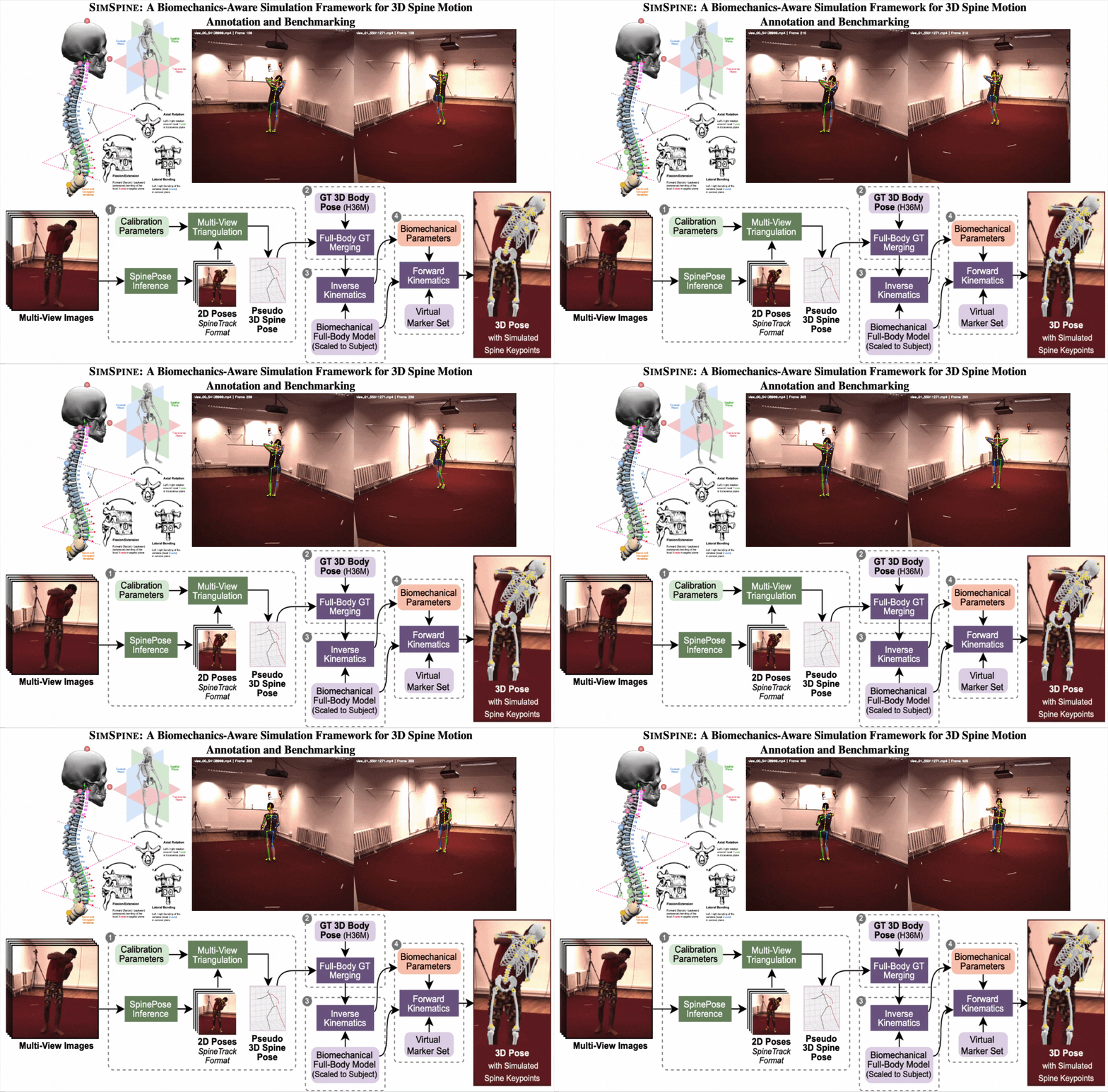
Public discussion of spine pose estimation, spine motion analysis, and spine biomechanics AI is still scattered: radiology papers focus on anatomy and pathology, commercial posture systems focus on repeated screening, and motion-focused computer-vision work rarely connects back to vertebral biomechanics. This hub compresses that landscape into one map.
- The field is strongest on static anatomical understanding in CT and MRI, where shared segmentation benchmarks already exist.
- Radiograph and biplanar systems are clinically important for deformity and alignment, but open ML workflows are less standardized.
- Surface topography and structured light enable repeated, radiation-free follow-up, yet public benchmarking remains sparse.
- Markerless RGB and RGB-D systems are only beginning to expose spine-aware motion, vertebral kinematics, and deployable inference.
Why this needs a field guide
The work spans clinical imaging, posture screening, surgical navigation, and markerless motion analysis. Each setting sees a different part of the spine. The chapters below put those methods side by side, then look at what can be tested with public data.
A 2023 scoping review surveyed 365 studies on deep learning for spine imaging. It reported external validation for about 15% of developed models. That gap between promising methods and reliable evaluation runs through this part of the book.